

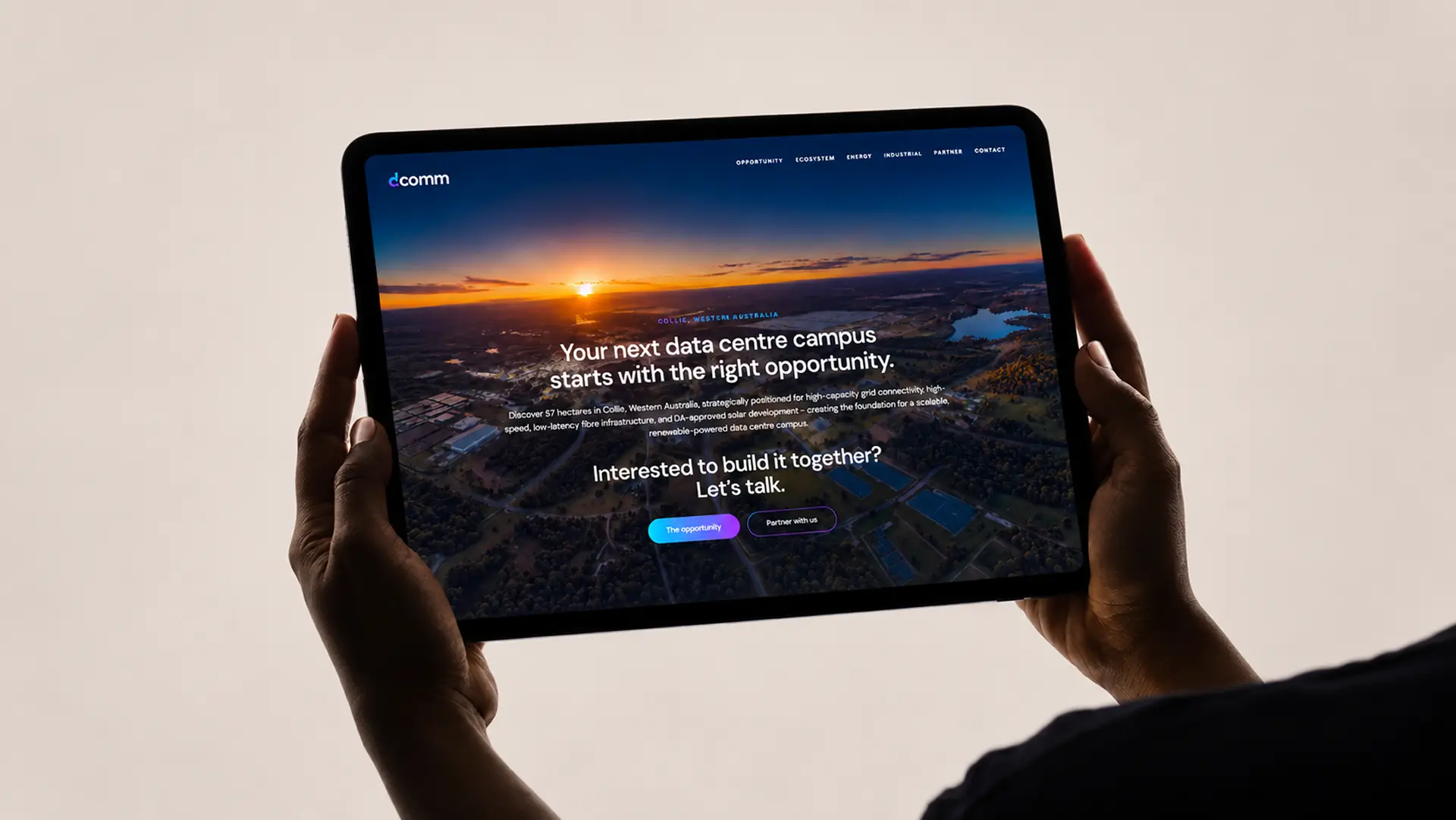
Introducing DEIH: AI infrastructure at the Collie Energy & Industrial Hub

DEIH is developing the Collie Energy & Industrial Hub in Western Australia: an energy and industrial hub built around approximately 57 hectares of owned land, a 23-hectare Light Industrial precinct and existing solar development work. Our new website explains how those foundations could support a future AI data centre campus, subject to customer requirements, infrastructure assessments and project approvals.
What can visitors learn about the Collie Energy & Industrial Hub?
The website brings the project’s location, development history and potential partnership pathways into one place. It is designed for data centre developers, infrastructure partners, strategic investors and government teams deciding whether Collie merits a closer look.
DEIH stands for Dcomm Energy and Industrial Hub PTY Ltd, ACN 654 538 413. The project is the Collie Energy & Industrial Hub at 323 Patstone Road, Collie. We welcome developers and infrastructure partners assessing how the location could support a defined customer requirement.
Our starting point includes land acquisition, industrial rezoning across part of the property, an existing solar development approval and solar/BESS feasibility work. These are the foundations on which a specialist partner can assess a customer-specific project. The public website presents the opportunity; detailed diligence establishes the evidence needed for a transaction. DEIH project website
How could an AI data centre fit within the wider hub?
An AI data centre provides the physical environment for compute equipment, networking, cooling and associated services. An AI factory adds a specialist operating model for creating and deploying AI capabilities. DEIH’s role is to explore the land, energy and infrastructure platform that could accommodate such a development with an experienced partner.
This creates several connected design questions. Where should the first buildings sit? Which land is needed for electrical infrastructure? How should future expansion be protected? What fibre services can be delivered? How does the intended workload influence cooling, resilience and energy procurement?
Answering those questions together can prevent an early land allocation from restricting a later infrastructure solution. It also allows complementary industrial activity to be considered within the wider site, where uses are compatible.
Which parts of the opportunity are established?
| Land | Approximately 57 hectares owned | Define the campus and infrastructure footprint |
| Planning | Approximately 23 hectares zoned Light Industrial | Confirm the proposed data-centre approval pathway |
| Energy | Solar approval and solar/BESS feasibility | Assess customer-specific demand and connection requirements |
| Fibre | Telstra Aura regional connectivity opportunity | Confirm site access and contracted services |
| Delivery | Partnership pathways under consideration | Agree responsibilities and a commercial structure |
The distinctions matter commercially. A renewable-energy study does not allocate firm electricity to a data centre. Regional fibre infrastructure does not establish a commissioned site service. Industrial zoning does not, by itself, approve a particular campus design.
How should a potential partner use the website?
Start with the overall opportunity, then identify the questions relevant to your role. A developer may prioritise power, land and timing. An operator may focus on customers, resilience and connectivity. An investor may want to understand development milestones and governance. Government teams may examine infrastructure coordination and regional outcomes.
A productive enquiry sets out the intended use, initial and ultimate facility demand, indicative land requirement, target delivery window and proposed commercial role. These inputs let us discuss a specific development brief rather than an undefined project concept.
Our five foundations guide explains how the site’s principal workstreams connect. The developer enquiry guide sets out the information that can make the first conversation useful.
Frequently asked questions
Is DEIH already operating an AI data centre?
The campaign presents a development opportunity. It does not announce an operating AI data centre, installed GPU capacity or a contracted hyperscale tenant. The eventual project would be shaped with a qualified development and operating partner.
Does the website contain the full project data room?
The website provides public orientation. Detailed title, engineering, approval and commercial documents may be shared through an appropriate confidential diligence process, depending on the enquiry and the information requested.
Who should contact DEIH?
We welcome relevant approaches from data centre developers, operators, infrastructure partners, strategic investors and prospective purchasers. Government and regional organisations can also discuss the project’s potential contribution to Collie’s transition.
Explore the project
Visit the DEIH website and share your intended use, infrastructure requirements and preferred role. We can then identify the most useful next discussion.
For more detail on land, power, fibre, approvals and partnership structures, see the Collie Energy & Industrial Hub FAQ.
Sources and project information: DEIH project website; DEIH strategic partnership opportunity